product detail page
Amazon's product pages are among the most visited on the internet. They're also overwhelming by design. Every piece of information a developer thought someone might want, all at once, all competing for attention. This is a rethink of what the top of that page could be.
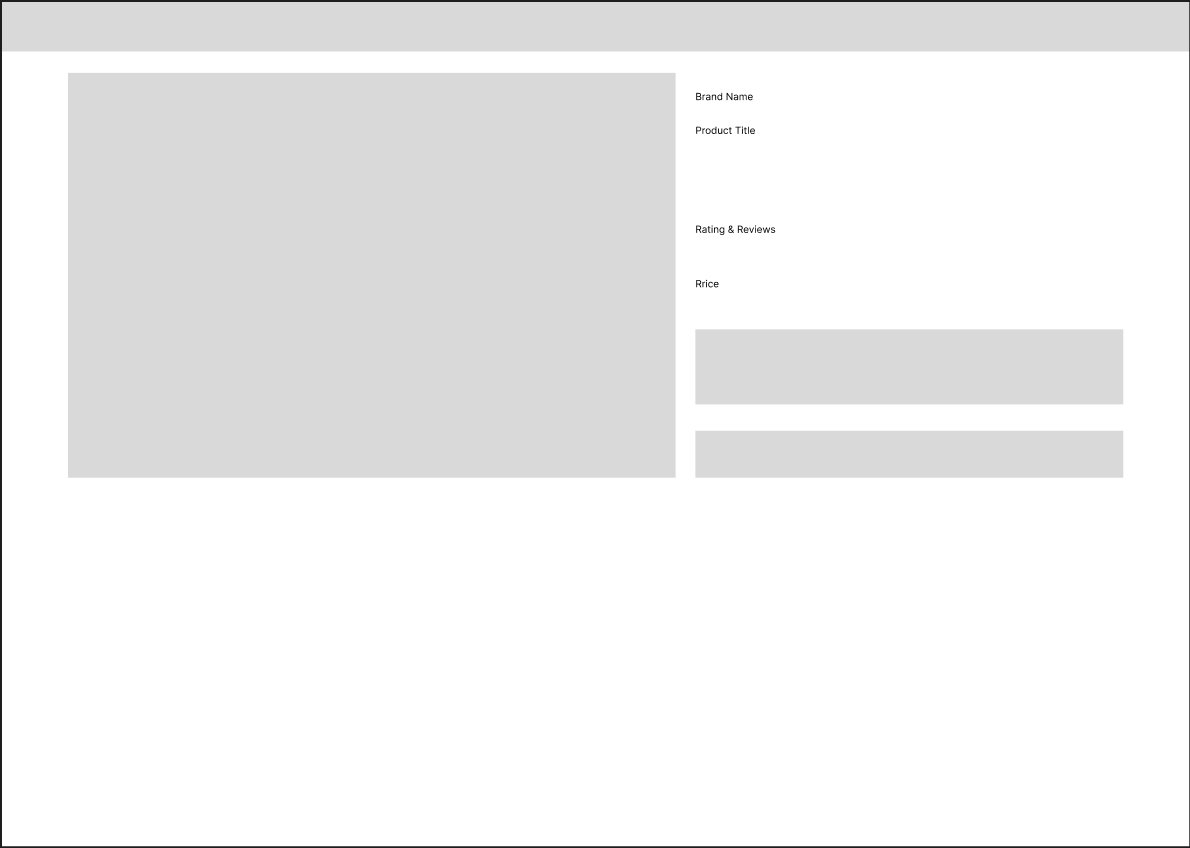
The first session focused on the top of fold: building a wireframe that was clean, easy to read, and not overwhelming. The goal was to focus on what customers actually need to make a purchase decision, not everything a product team wanted to include.
I wanted to lean toward making it pretty more photos, less text. But that's more appropriate for a browsing experience. This is a targeted shopping page. I tried to meet in the middle of utilitarian and aesthetic, guided by user behavior rather than my own taste.
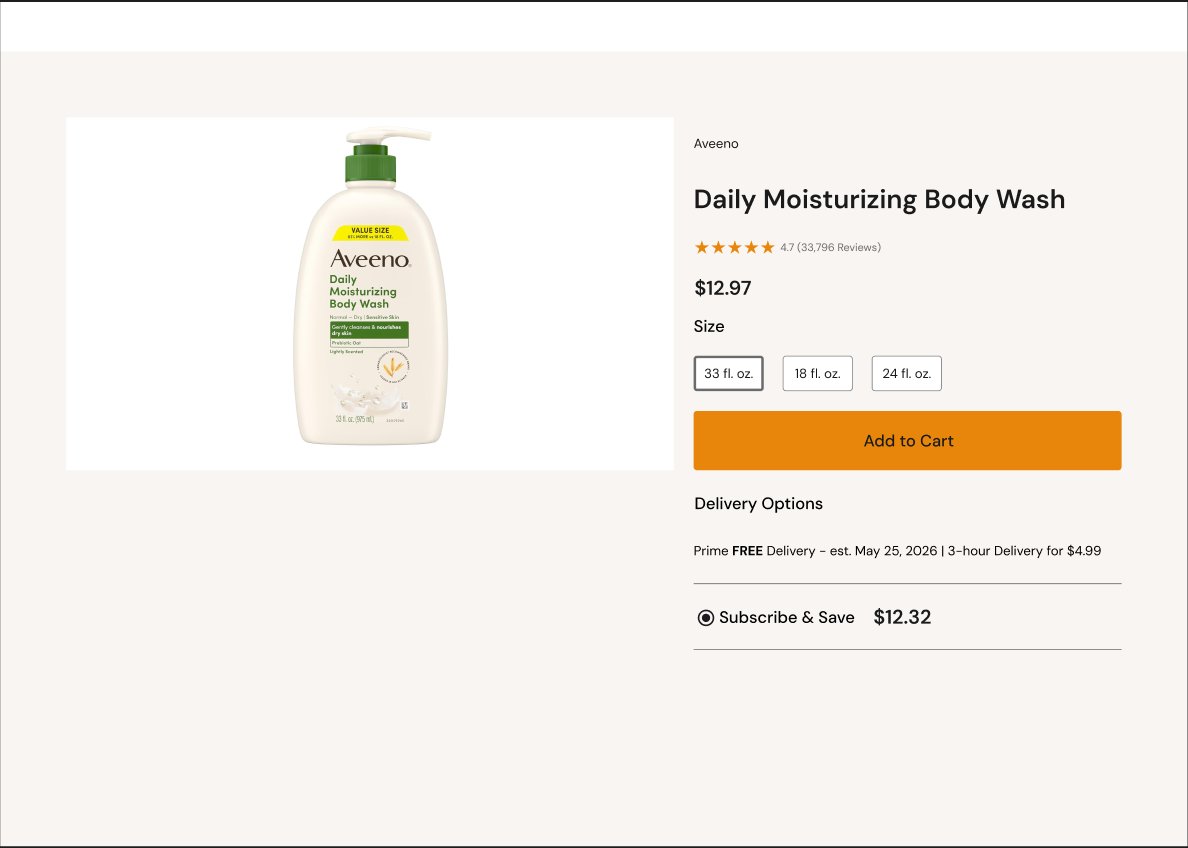
Spacing. Even though it was only meant to be top of fold, everything sat in the first half of the viewport. The next session needed to distribute elements more intentionally across the full height.
Added delivery options and a Subscribe & Save option below the Add to Cart button. Rebalanced the page by tightening spacing and refining the size selector treatment.
Changed the size option buttons to be smaller and more compact because they're selectors, not actions. The Add to Cart button should be the only element that reads as a primary action on the page.
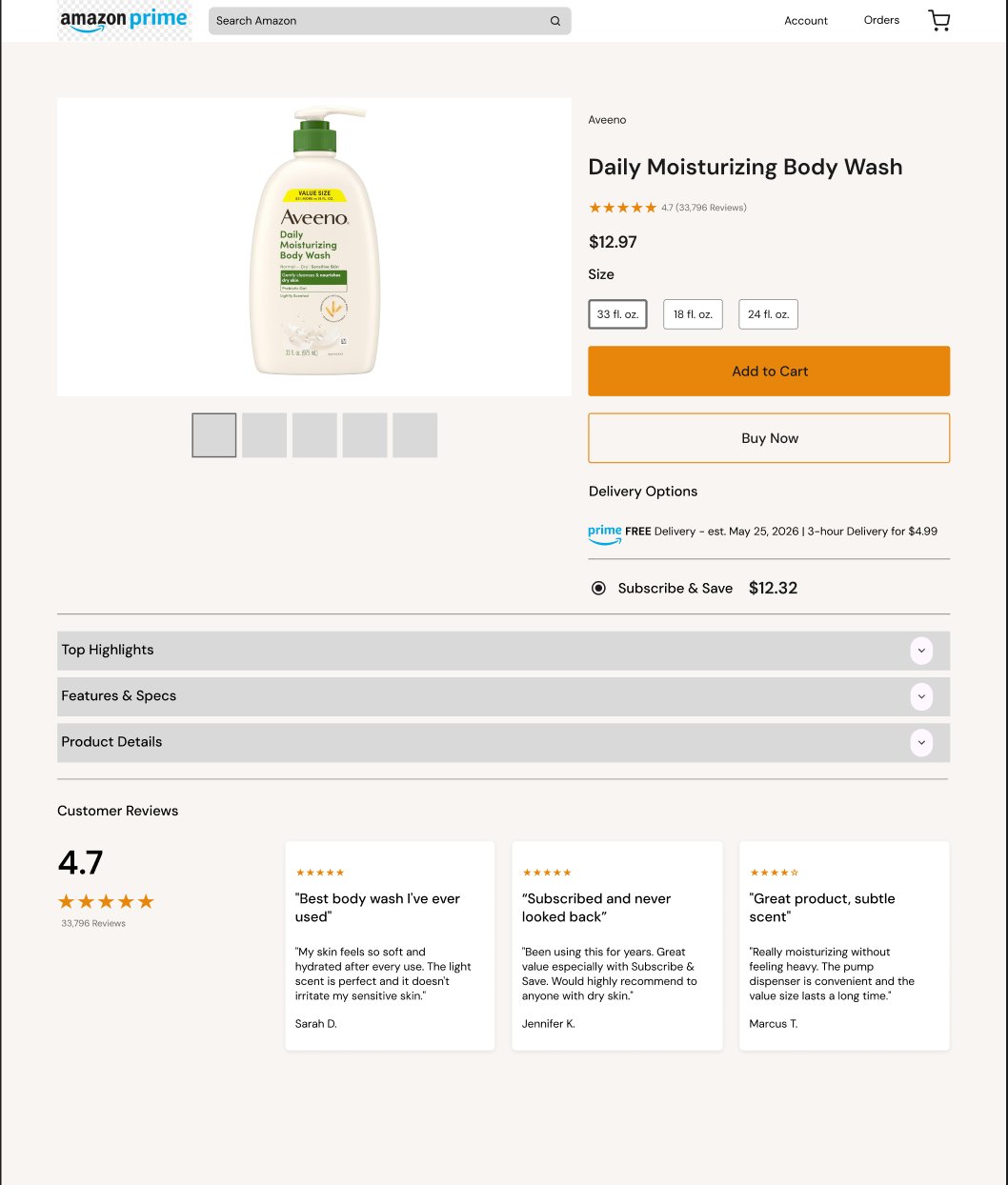
The photo felt top-heavy. The next session needed a thumbnail carousel below the main image to rebalance the visual weight and give users access to multiple product views.
Built out the product specs section using collapsed accordions and a customer reviews section with an aggregate score and individual review cards.
Used progressive disclosure to hide most of the text Amazon currently exposes, while still making it available when people need it. Show only what's necessary for the purchase decision and let users opt in to more.
The aggregate rating score felt visually off at 64px. Adjusted down to 48px for better balance with the review cards. Also added a Buy Now button as a secondary outlined CTA Amazon includes it for high-intent returning users, and it belongs here too.
The hardest part wasn't simplifying the layout it was resisting my own aesthetic preferences when they conflicted with what the user actually needed. A shopping page isn't a mood board. The discipline of designing for intent rather than beauty, and finding the overlap between the two, is what this project was really about.